

This post was created as part of the Coloso Supporters event. #sponsored
Welcome, dear reader of Flame2Fame Music blog!
As you already know, my blog is mainly about making and promoting music. But “music” is a wide topic.
We live in a time when the industry is changing fast. On one hand, writing and releasing music has never been more accessible. Anyone can produce quality tracks, put them on streaming platforms, sell them in digital or physical stores. All you need is an affordable studio setup, a collection of virtual synths and effects, the skills to use them, and an internet connection.
But there is a dark side — and musicians are talking about it louder than ever.
At the start of 2026, around 100,000 to 106,000 tracks are released every single day. That’s huge. Now imagine your track — the one you worked so hard on — comes out on the same day as 100,000 others. Feel that? I just cringed.
The main problem musicians face in 2026: you not only have to create great, catchy music — you also have to fight for attention from an audience that’s spoiled by digital entertainment. Being just a good musician is not enough anymore.
Social media is full of funny videos about the crazy things artists do to keep attention: studio vlogs, behind-the-scenes clips, music video shoots, text posts, pitching to streaming services, designing covers. And that’s not even the full list. Most of this has nothing to do with actually writing music.
The independent musician has officially become a content maker.
The first thing listeners notice now is not the music itself — it’s the artist’s charisma on social media, the format of their videos, the style of their personal brand. That’s what hooks people first. Then, and only then, the quality of the music turns them into a real fan.
Anyone with experience in the industry who wants to promote their music seriously understands this. 90% of all the content mentioned above is visual — seen with the eyes, not heard with the ears. So the real question is: what kind of visual content should you choose to promote your work?
Start with yourself. Ask: who am I? What do I enjoy doing? What content can I make regularly without burning out?
Many musicians go for short, funny clips. You can post them often because they’re quick to make, and the number of ideas is endless. Plus, social platforms love that format — Instagram, TikTok, YouTube Shorts.
But what if you’re not «funny»? What if you’re calm and thoughtful? What if your music doesn’t entertain the masses but tackles serious social issues (rap, rock) — or, instead, creates an atmosphere for focused work or chill relaxation (lo-fi)?
Mainstream culture often pushes the image of a «choleric» artist — energetic, provocative, constantly cracking jokes on camera. You don’t have to follow that cliché.
If you make content that doesn’t fit your true nature, you’ll burn out quickly without ever getting the recognition you deserve. Listening to yourself is essential.
Choosing a content format and style matters for another reason: when you pick a common format, you automatically compete with many other creators in that niche. To play that game, you need to be energetic, productive, and ready to defend your place as an artist.
If you follow my logic, the conclusion is simple: the more unique your content format and style, the fewer competitors you have. You’re not squeezing into an existing niche — you’re creating your own.
Yes, this path is harder. The results take longer. But it allows you to become truly original and fully express yourself as a creative person. Finding your own format and style requires experimentation.
Here I want to draw an important parallel.
Unlike the mainstream Western mindset — focused on results above all — I’m much more drawn to the Japanese focus on the process:
A samurai has no goal, only the path.
How This Philosophy Led Me to Coloso
Searching for a unique visual approach first brought me to graphic design (Affinity) and 2D animation (Moho), and two years ago — to 3D. My 3D tools of choice are Blender and Curvy 3D.
But software is just a tool. Owning a program doesn’t make you an artist. Technical knowledge, experience, and an artistic vision — that’s what sets you apart.
Finding your format and style means moving from the general to the specific.
First you learn the interface. Then the core mechanics. Then specialized techniques.
Only with a solid foundation can you invent your own methods — the ones that will define your style and make you unique.
Remember what I said about starting with what resonates with you?
The visual style that resonates with me is anime.
As a kid, while other boys watched fairy tales, I watched Transformers and Pokémon. As a teenager, I got deeply into Japanese culture and devoured cyberpunk anime: Ghost in the Shell, Appleseed, Gungrave.
My special love is Samurai Champloo. It brings together everything I truly love: medieval Japanese aesthetics, samurai, jazz lo-fi beats, and rap.
Samurai Champloo was my inspiration for making my own lo-fi tracks.
Six months ago, I finally understood what kind of content I want to create. You’ve probably guessed — anime style. My goal for the near future: release original rap tracks and create full music videos in anime aesthetics.
But watching anime is one thing — making it is another. 3D is complex and requires specialized skills.
That search led me to Coloso.
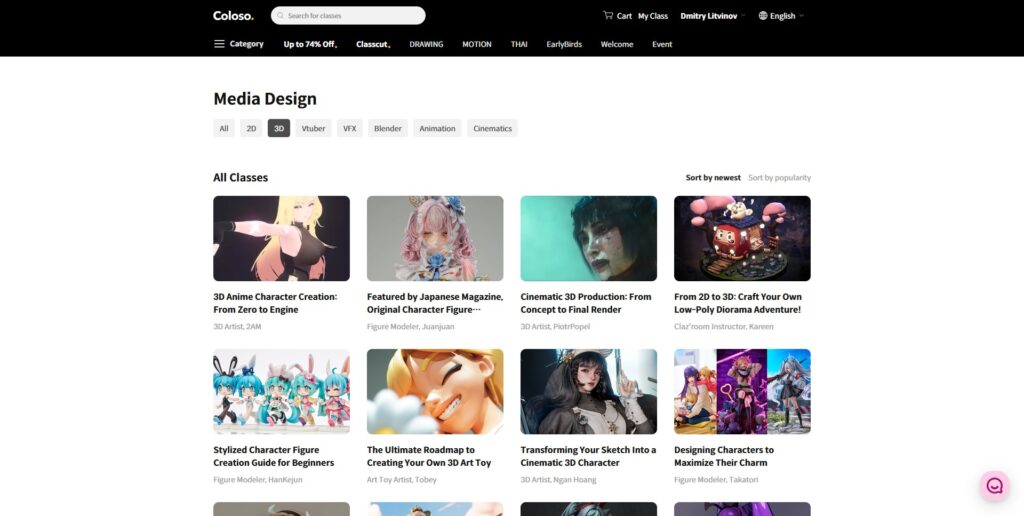
Coloso has many high-quality anime courses. They’re designed both for digital anime illustrators and 3D animators working in this style.
What stands out immediately, even from the trailers: Coloso courses are made by true professionals. The quality shows in every frame.
Recently, Coloso opened applications for ambassadors. I hesitated (my doubts were only about my own competence), but I applied. And what a joy when my application was accepted.
This post was originally planned as a review of Nanigashi’s course — Stylized Action in Blender: Crafting a Bold Cel-Shaded Look. So let’s finally get to the review.
The long backstory was necessary to show how this course can become part of a larger workflow and help build a strong artistic identity.
At the end of the course, the author himself says: the real start comes after you finish. He recommends copying his actions only during the course — then creating your own unique animations for your own projects.
I will follow his advice.
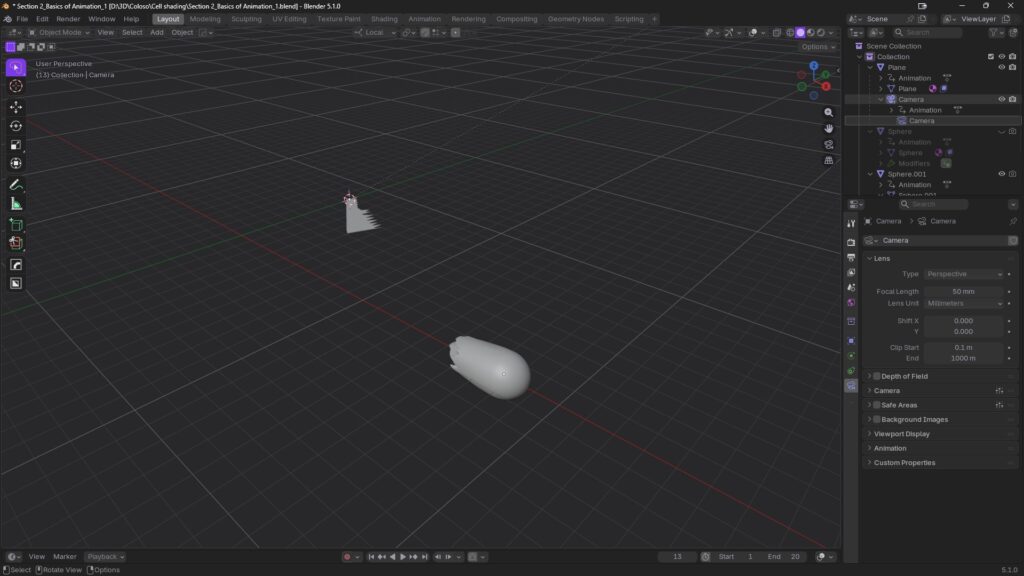
My example is not the only use case. For Blender animators, this course works as a clear, intuitive guide.
And yes, the reverse also works — some of my followers are 3D artists who recently started making music.
Check out this course.
How I Went Through the Course (Unconventionally)
Most people go step by step, documenting progress at every stage. But I skimmed the first few videos and realized: I want to get a general impression first (for this review), and only then go back and do the course properly. So I grabbed tea, cookies, and started watching.
Important note: despite being affiliated with Coloso, I try to be objective — I’m always honest with my readers. But it’s hard to be impartial because Nanigashi’s skill and attention to detail have earned my deep respect and admiration.
What Awaits You in This Course
The course is designed for people who already have some experience with Blender. Absolute beginners should start with a basic Blender course first.
Topic: creating fighting game style animations in an anime aesthetic.
Structure: the course is well organized — lessons are split into thematic sections, ordered by difficulty. You start simple and move to complex, smoothly. Advanced techniques often build on previous lessons.
Nanigashi uses two main teaching methods:
- Learn by doing — you copy his actions and learn to achieve similar results.
- Iterative learning — repeatedly changing parameters and seeing the result immediately.
Learn by doing builds technical Blender skills for animation. Iterative learning helps you feel the essence of animation: timing, spacing, composition.
The value of this course is that Nanigashi emphasizes the artistic approach, leaving you space to experiment freely.
This course is not just another Blender tutorial.
I’ve uploaded my old logo animation (made in Blender) on my site. I used it as an intro for all my videos. I used to be proud of it. But after starting Nanigashi’s course, I realized I still have so much to learn.
This is a completely different level of professionalism and attention to detail.
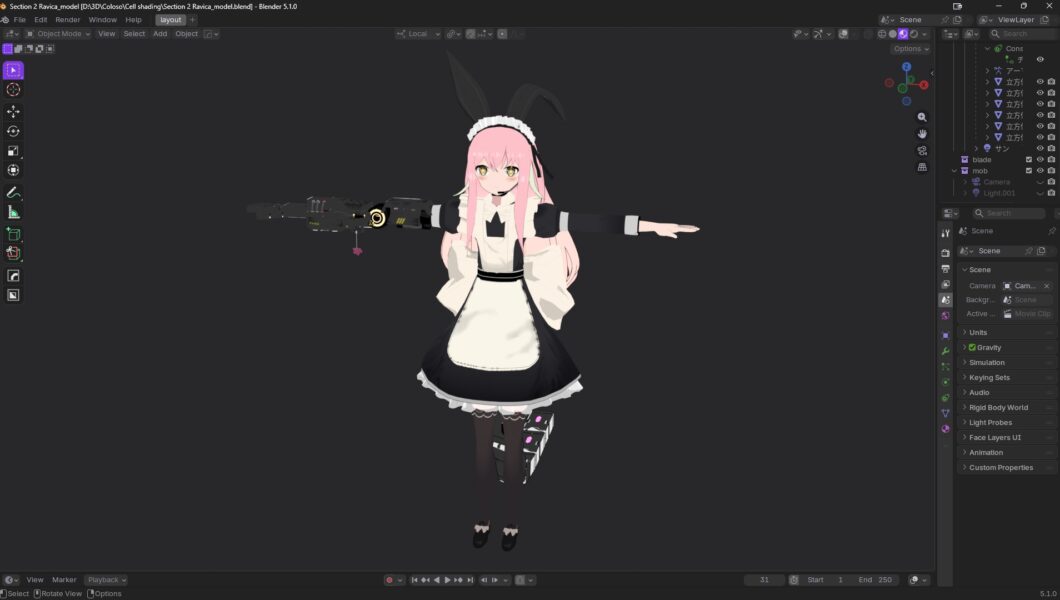
The course model even has a name — Rävika. Such personification shows that the author is truly passionate about the project and enjoys his work.
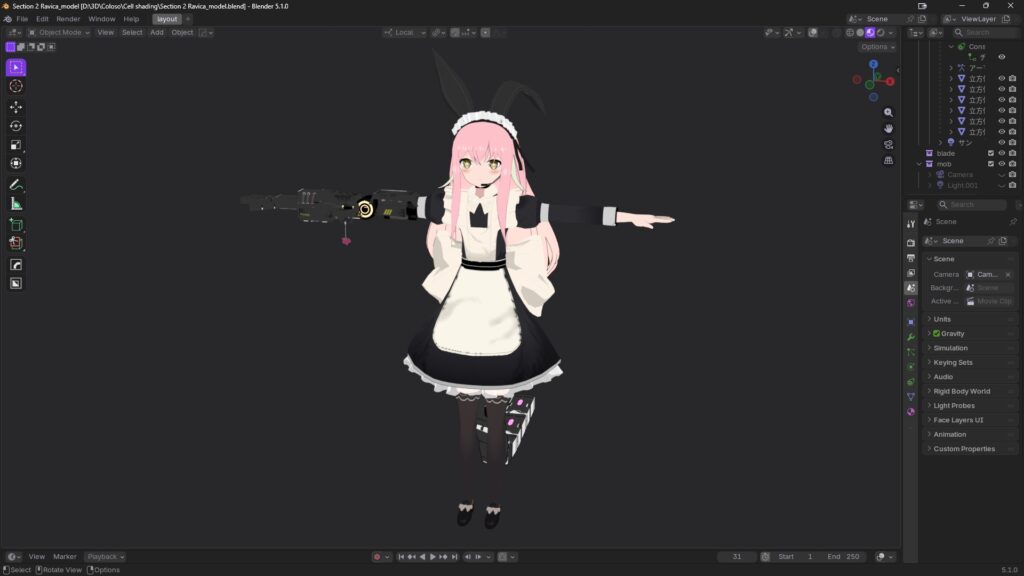
During the course, that passion started rubbing off on me.
Fighting action animation is complex — high dynamics, interaction with opponents, weapons, magic. But once you master intense fight scenes, less dynamic scenes will feel easy.
I felt a big responsibility writing this review. You might think taking this course was a necessity for me — and yes, it was.
But I’m also absolutely sure that you too will find valuable uses for what you learn here.
Let my example motivate you.
Links
- Full course details: https://bit.ly/4mSpuyc
- Discount Link: https://bit.ly/glsupporters_2nd
#colosoglobal #colososupporters
Thank you for reading.